

Early childhood educators across Nebraska are joining the first study of Connections for Kids — an educational approach focused on strengthening children’s social and emotional development.
Connections for Kids is part of the University of Nebraska–Lincoln’s TransformED initiative, dedicated to supporting young children, families and early childhood educators in Nebraska.
Beginning in fall 2025, the study will be implemented in nearly 100 early childhood classrooms statewide over two years. Read on to learn more about the approach, why it matters and the key partners making it possible.
What is Connections for Kids?
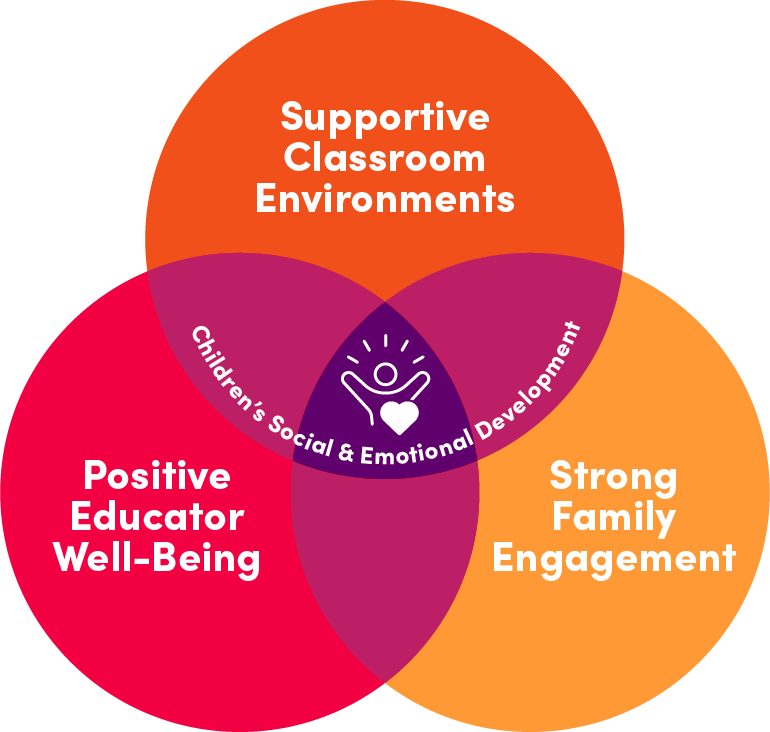
Connections for Kids is an educational approach designed to strengthen children’s social and emotional development through innovative, evidence-based practices. The unique approach brings together three evidence-based programs that:
- Promote supportive classroom environments.
- Enhance strong family engagement practices.
- Support positive educator well-being.
Aligned programs
Connections for Kids integrates the following widely used programs in Nebraska:
- CHIME is a program designed to promote well-being among educators and children they serve by fostering a culture of mindfulness and reflection.
- Pyramid is a multi-tiered program that promotes responsive relationships and supportive classroom environments. It includes social and emotional teaching practices, as well as intensive, individualized interventions to address challenging behavior.
- Getting Ready is a family engagement program that focuses on enhancing relationships within and between systems (i.e., homes, early childhood programs) and strengthening collaborative partnerships with parents to boost learning and development.
CHIME and Getting Ready were both developed at the University of Nebraska–Lincoln. Pyramid was created by the Nebraska Children and Families Foundation through its Rooted in Relationships initiative.
Why does this work matter?
Nebraska’s early childhood workforce is facing increasing stress and demands — often with limited resources and support. To meet the growing needs of children and families, educators need innovative tools and training that make it easier to deliver evidence-based practices. Just as importantly, educators need a consistent, coordinated system of support to sustain the essential work they do.
Connections for Kids brings together programs that already work well in Nebraska, streamlining them into one educational approach. The goals: promote high-quality care and education, support educator well-being, and nurture children’s social and emotional skills that help them thrive, both now and into adulthood.
Who is involved?
Connections for Kids was developed by UNL, state and community partners using a highly collaborative process. The design team includes more than 20 trainers, teachers and developers representing the three aligned programs — each providing input to ensure the approach is practical, meaningful and impactful for today’s early childhood workforce.
Key partners in the design and implementation of Connections for Kids include the Nebraska Children and Families Foundation and Nebraska Extension, among other community programs. This work would not be possible without their knowledge, guidance and willingness to collaborate.
Connections for Kids study participants include nearly 100 early childhood educators who care for young children (ages 3-5) in preschools across Nebraska. A total of 288 children will be involved.
How does it work?
Educators participating in the study will be placed into one of two groups:
- “Training” group – 48 educators will engage in the Connections for Kids approach.
- “Business as Usual” group – 48 educators will continue using their typical practices.
The training group will engage directly in the approach, receive ongoing training, coaching and participate in communities of practice to enhance educator well-being and build capacity to deliver evidence-based practices. Educators in the “Business as Usual” group will continue their normal routines and provide important insight into current practices in early childhood settings.
The study will take place over two years and include two separate cohorts.
All participants will play a vital role in helping researchers understand how Connections for Kids compares to typical early childhood education experiences.
What will we learn?
The study will help the TransformED team understand whether Connections for Kids makes a positive difference for educators, children and families — and how it compares to using “business as usual” practices in early childhood programs. Findings will help strengthen and refine the approach for future use.
Interested?
To learn more about Connections for Kids and the study results as they become available, please send us a message.
The University of Nebraska–Lincoln’s TransformED is a collaborative research initiative that promotes children’s social and emotional development by enhancing early childhood education services, strengthening connections across systems and supporting the workforce. TransformED is funded by a Grand Challenges Catalyst grant from the UNL Office of Research and Innovation.